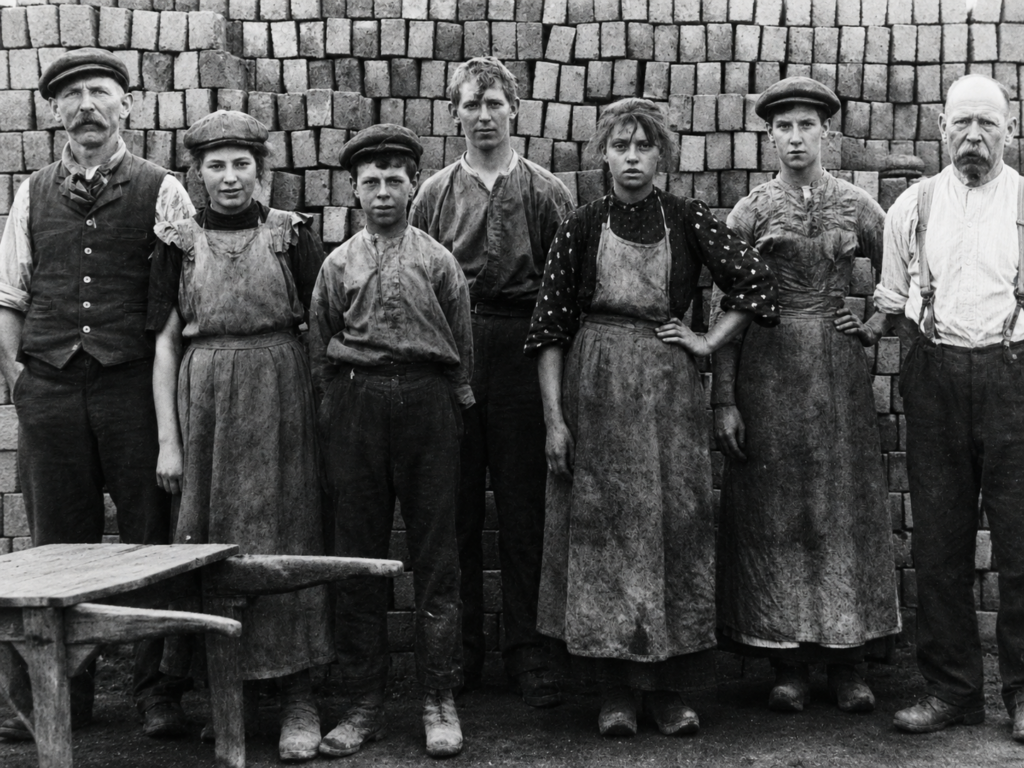
Burnhope Brick Flatts was located behind West Terrace. Clay was quarried there and the bricks moulded, dried and fired on site. The bricks were used to build West Terrace, other houses and colliery buildings.
On the end of West Terrace was a colliery official’s house. This became Doctor Grant’s surgery in July 1930, and later became the ‘One House’ restaurant.
On March 26th 1918, in an explosion at the brick works, part of the roof blew off the drying shed, “owing to H. Smith leaving 2 sticks of gelignite on the floor to thaw”.
The special bricks to build the War Memorial in 1921 were made in Burnhope. They were manufactured as half tiles to resemble those of Flemish farmhouses. Many servicemen fought and lost their lives in villages in the Flanders region of Belgium.
After reconstruction and closure in 1923 the Brickflatts shed became a garage for Harry Brown’s bus, which ran only one or two days a week at first, but eventually provided a frequent service to Stanley and Annfield Plain and to Durham via Sacriston.
The rest of the site was taken over by wooden huts for pigeons, dogs and even ponies. Children used to fish in the ponds that filled the disused quarry.
Eventually the quarry was filled in by dustbin men dumping waste and the area became the village football pitch.
It was the tradition to chase any visiting football teams out of the village before inviting them back for a ‘slap up’ tea.
The Burnhope Football Team was once suspended from the league for throwing the referee into the pond beside the pitch. Also the partners of the players once threw the players’ clothes into the pond when they were very disappointed with the team’s performance.
The football pitch was lost to Open Cast Mining in the 1980s.