Barium carbonate, BaCO3, occurs naturally as Witherite, formed when geothermal activity infiltrates faults, so it occurs in near vertical deposits (75 – 80 degrees) unlike coal that occurs in near horizontal deposits. One of the five veins of the mineral was discovered crossing the Hutton seam being mined from the Morrison North Pit in about 1928 close to the Burnhope Parish boundary. The Witherite Mine commenced production in 1932 and was worked until 1956, employing 200 miners at its peak. In 1946 it produced half the world’s production! The mine closed in July 1958 partly as the seams had thinned and partly due to the stringent new regulations in the
Mines and Quarries Act 1954 that were then coming into force.
The thickness of the Witherite varied from minute hair veins up to 12 feet of mineral filling a fault. The main veins were very irregular and contained considerable areas of barren ground. One of these barren grounds almost caused the mine to be abandoned. But instead of petering out, a further 50 yards of hopeful tunnelling found the ‘bonanza’ area, a 22 foot seam with four more new veins joined to it.
Initially the haulage of the mineral extracted was very primitive. To improve this, a steeply inclined (85 degree) main access shaft was driven down from the Hutton level, and a 45 degree inclined shaft was driven up from the Hutton level to the surface close to Moor Lease Farm. A winder was installed and mineral lifted into a hopper on the surface. Initially it was carried by road to the treatment plant at Morrison North Pit, but Keith Williams, who was the Morrison underground haulage engine man, remembers handling one underground train of Witherite every week.
150 to 200 miners, including many from Burnhope, accessed the mine by the new shaft, climbing 250 steps down to the Hutton level and then another 400 feet down ladders to the workings. The method of mining Witherite is very different than coal extraction. A vertical form of ‘Bord and Pillar’ coal working was used with levels at 30 foot intervals, with solidly packed stone debris being used to provide intermediate floors as the excavation proceeded upwards from each level.
The only fatal accident to happen at this mine took place during the excavation of the new shaft. A workman was trapped by his legs when fine sugar like Witherite fell from the face of the rising drive, and he was eventually buried by the mineral and died from asphyxia. Witherite is poisonous. It caused sixteen ponies to die when their feed was carried in tubs that had carried Witherite. Drilling and firing raised a lethal dust which caused silicosis. The remainder of the inclined shaft was excavated down from the surface and the stone deposited in the disused Peth Bank Quarry.
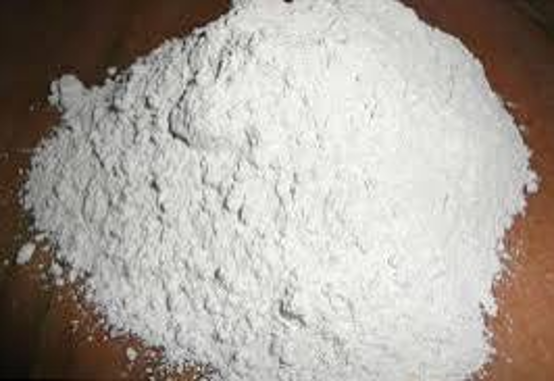
Witherite was difficult to prospect for and was hence rare. The mineral was used to produce Barium products with a number of uses at the time: Screening X-rays and nuclear reactors, as a component of soaps, paints, linoleum, insecticides, cellulose lacquers and pharmaceuticals, and for refining sugar beet.
The mine produced 233,579 tons of Witherite between 1932 and 1956. Together with the Settlestones mine in Northumbria, for a time the North East of England produced nearly all the world’s production of Witherite.