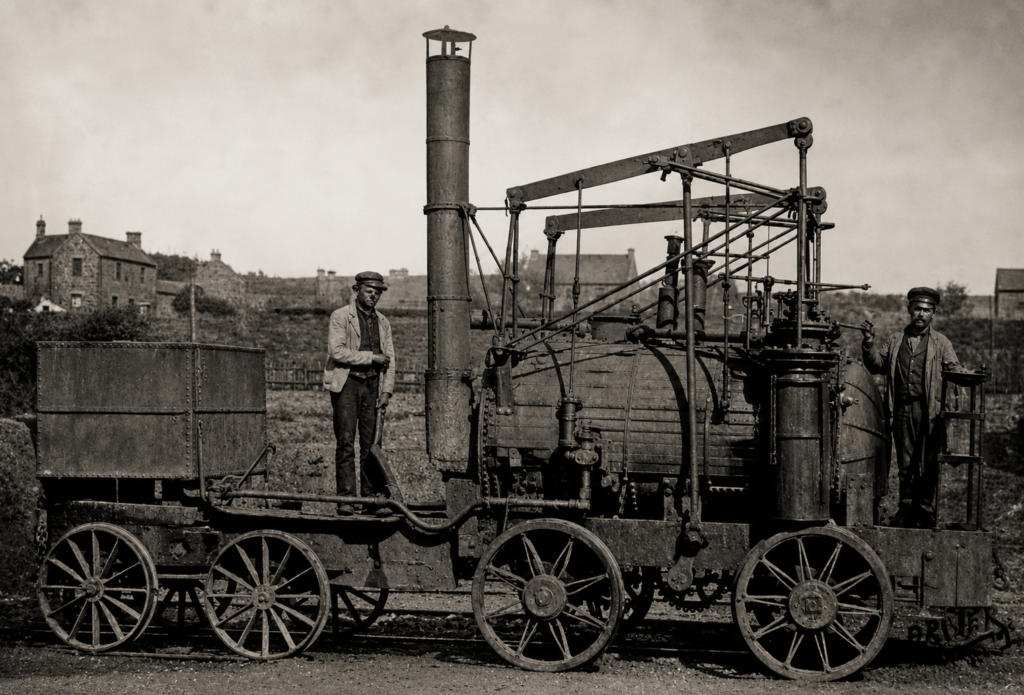
Burnhope village was founded by the sons of William Hedley. In 1814, while he was viewer (manager) of Wylam Pit, William Hedley oversaw the building of Puffing Billy and Wylam Dilly amongst the first steam locomotives built, pre-dating Stevenson’s Rocket by over a decade. You can ride on a working replica at Beamish Museum. In 1839 in partnership with others he invested his money to open South Moor, Holmside and Craghead Collieries. On his own he leased acres of land in Burnhope, for the purpose of mining coal, prior to his death in 1843.
William’s four sons, Oswald, Thomas, William and George built 55 wooden houses to house the development workers, probably in 1844 to form East and West Wood Rows. In order to mine coal, the Hedley brothers not only had to sink a shaft but also build Burnhope Wagonway to take coal to Craghead Colliery for onward passage to the Pontrop and South Shields railway and the River Tyne shipping staiths.
Craghead Colliery was two and a quarter miles away by the easiest route via Wheatley Hill. They built a railway embankment to give a 1 in 25 constant incline that exists to this day, but even this was too steep for locomotives. A stationary engine was installed in Bank Top Engine House at the highest point of the Wagonway. They then laid two railway tracks from the marshalling yard at ‘Try ‘em All’ Pit up the embankment and down the gradual decline to Craghead Colliery. The Hedley brothers gave up the lease in about 1860, probably to focus their resources on the far larger lease to the north that they were developing in partnership. Morrison South Pit was opened in 1869, and together with Louisa Pit (opened in 1759) and Hedley Pit, they were all operating by 1880 owned by Hedley and Bell, and were still being operated when Burnhope closed in 1949.
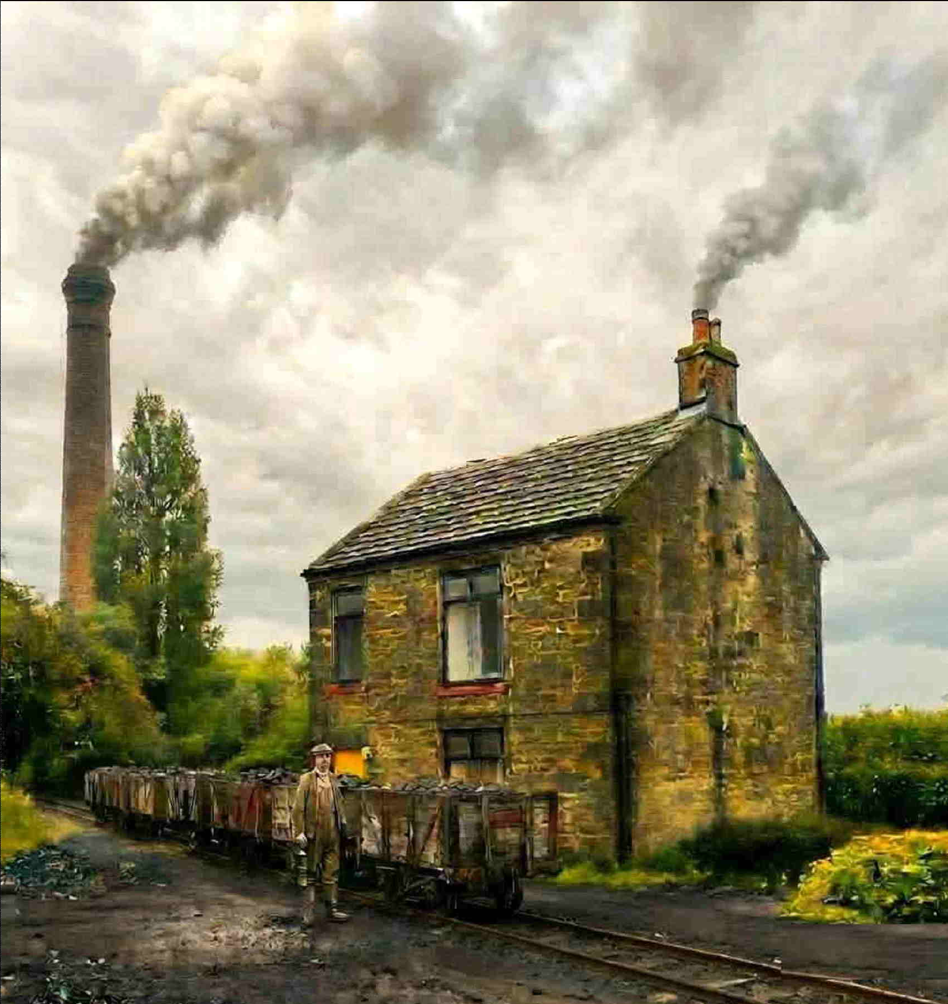
At its peak the Wagon Way was worked six days a week shipping between 500 and 1,200 tons of coal a day from Burnhope Colliery. Three hours before the day shift started, the fireman, who lived in the pump house, a cottage behind Bank Top Engine House, would light the furnace so steam would be available for the day’s work.