The parish of Holmside St. John was created in 1865 from St Mary and St Cuthbert, Chester le Street; Lanchester All Saints; Tanfield, St Margaret; Witton Gilbert, St Michael and All Angels.
Parts of this parish became part of the parishes of Annfield Plain St Aidan (1914), Craghead St Thomas (1912) and South Moor St George (1912). By 1865, the church of St. John, of Holmside parish, was built and consecrated. Funds for building the church were raised by money deducted from the pay of the miners at the Fortune Pit, so it was very much the miners’ church. Today, the church is the only building now standing which links back to the start of the mining heritage of the village.
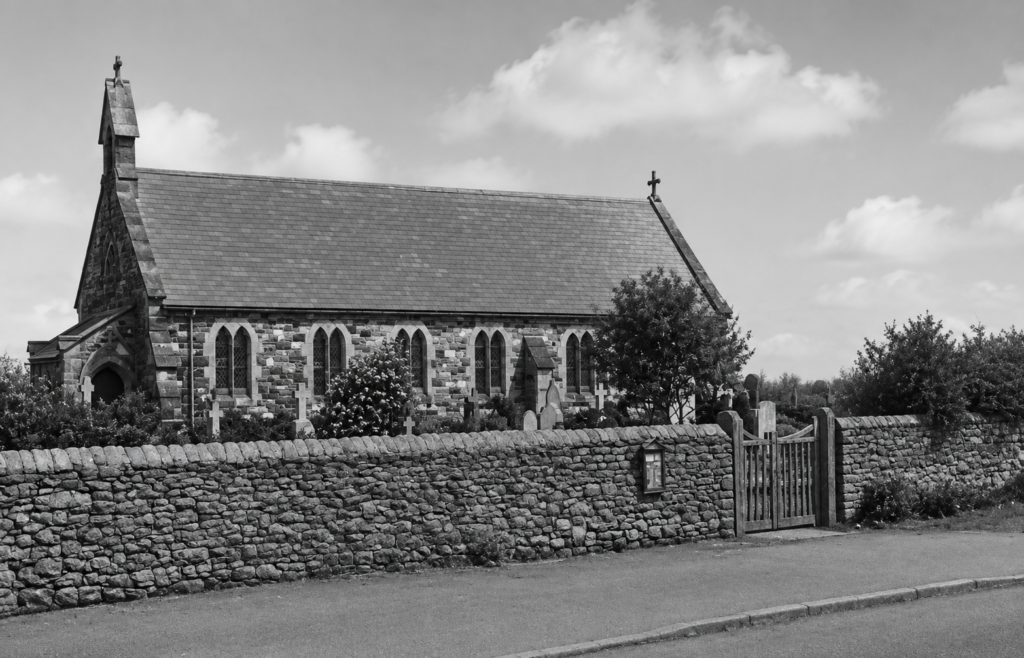
Described as “an exposed hilltop churchyard (site) at the east end of the village with scattered headstones, stone walls and trees on the boundary.”
At the time of building, when the collieries and wagon way were operational, most people lived towards the north east end of the village, many on the far side of the wagon way. This was locally referred to as “Yon-Side”, where many of the first houses were built to accommodate the influx of miners – Fell Cottages, East Wood Row and Church Row – situated opposite the church.
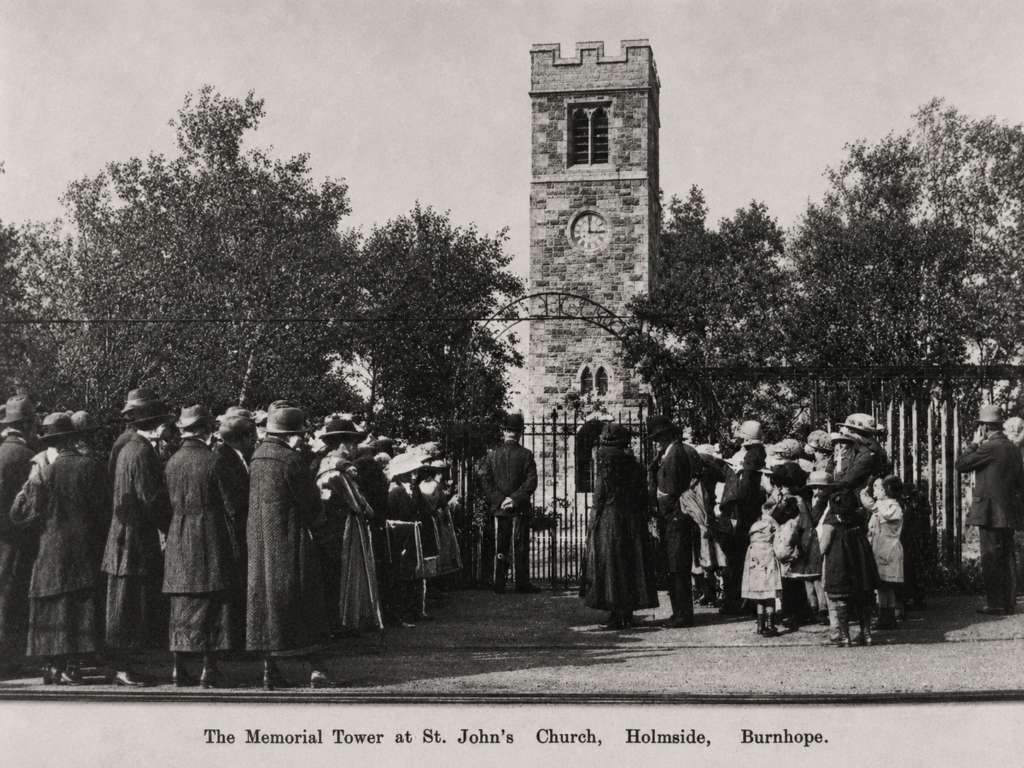
The village spread south westwards up the hill changing its demography. Mining families were rehoused into council built estates at the top of the village, the old miners houses being demolished over time until the only remnants of the early mining settlement were the old vicarage, the church and Ivy Cottage. With the closure of the mines and demolition of all colliery buildings, the church became isolated, in an apparently outlying position, removed from its central position in the hub of the mining community. After the First World War the mine owner Mr Ritson paid for a Memorial Tower with a clock and a peal of bells to be added to the church, as a memorial to the 64 men of Holmside parish, who had given their lives as the ultimate sacrifice for our freedom. At the base of the tower, an engraved stone tablet was laid, containing the names of the fallen heroes. The formal opening of the tower took place on 22nd September 1923, dedicated by the Bishop of Durham – Dr. Henson.
The first baptism was recorded on 30th January 1870, for John Southern.
The first marriage service was held on 12th March 1870 for John Lovett and Mary Ann Mains; and the first burial in the churchyard was that of Joseph Simpson Mason, aged 2 years, on 25th January 1870.