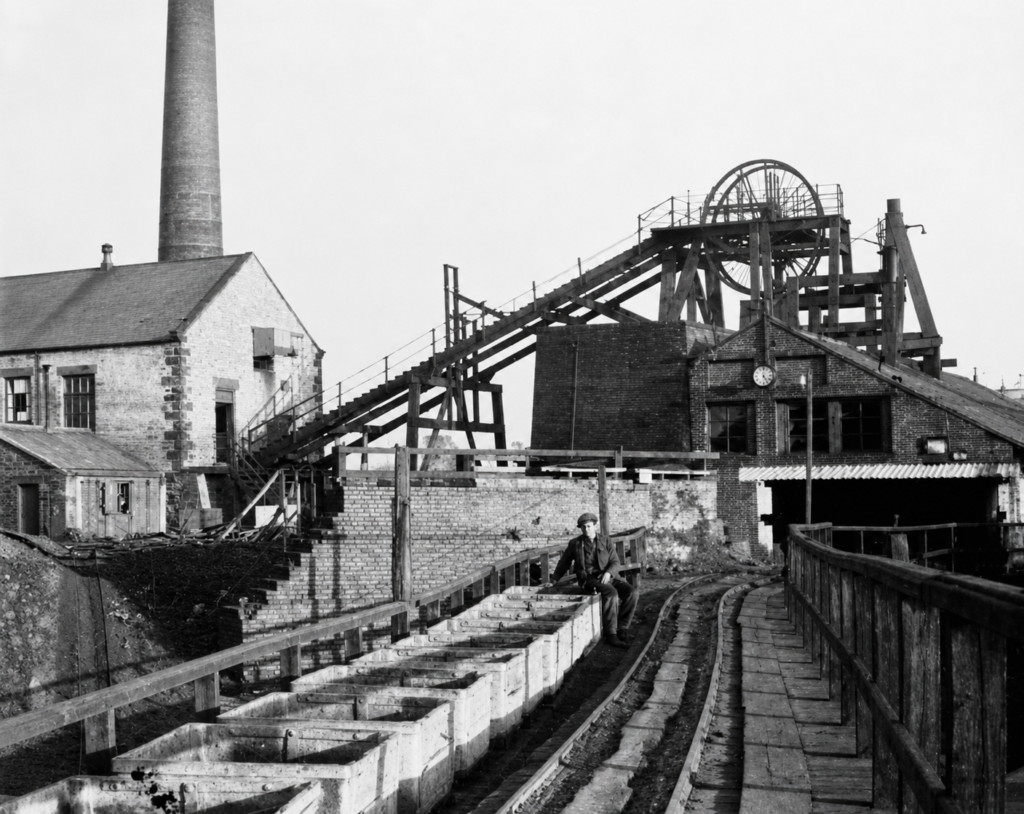
A 3 metre by 3 metre vertical shaft was blasted 190 metres through the rock to the Busty Seam and an overhead gantry built to bring coal tubs from Fortune Pit.
Coal tubs brought up from Annie Pit and brought across the gantry from Fortune Pit were tipped onto a conveyor. Boys would pick out stone, the coal then filling railway wagons running on the track below.
100 metres away from Annie Pit a furnace shaft was blasted 190 metres through the rock. Two underground boilers were installed and a brick flue built inside the furnace shaft. Smoke and spent steam from the boilers would rise up the flue, drawing fresh air down Annie Shaft providing much needed ventilation for the mine. Steam from the boiler was used to power the winches that dragged sets of coal tubs underground, Busty and Brockwell coal to Annie Pit, Hutton and Low Main coal to Fortune Pit.
Burnhope Pit Blaze
On the 31st September 1933 George Johnson, an undermanager discovered smoke coming from the brickwork behind the Busty seam boilers. In addition to the carbon monoxide hazard, it is an ignition source for coal dust and gas. The mine had been closed for four months. The underground boilers would have been kept alight to ventilate the mine. It was believed the coal behind the boilers had been smouldering for years, the extended closure causing the fire to break out. An underground fire is one of the worst disasters a colliery can suffer, yet Burnhope Colliery manager, Joseph Snaith, only records in his Journal:
“31st Sept 1933 G. Johnson discovered smoke at walls of Busty underground boilers, inspected and concluded there was a fire behind walls of No. 2 boiler arch. Telephoned to D. & N. C. F. R. B. and Houghton, Crook and Elswick Fire brigades arrived in less than half hour, and confirmed attendance to 8th October.”
The best way to extinguish a fire is to starve it of air, but this increases the poisonous carbon monoxide fumes, so wet sand was used to seal the fire. Some hot carbonised areas were dug out, some water was used to cool the fire and the ventilation was maintained.
A four foot wide roadway was driven around the effected area, completed on the 3rd October isolating an area of about 150 square metres. The fire isolated with a stone wall. The fire brigade was then withdrawn. They then had to delay any further action until the temperature had returned to normal. Thermometers were placed in bore holes and a decision to commence repairs was made at the end of November, and two weeks later one of the boilers was relit and tested hauling stone on the 28th December. Eighty hewers started working on the 2nd Jan 1934 in the Brockwell seam.
Following wild press reports: “Burnhope Pit blaze defies 120 fire fighters” and: “Coal white hot,” and other headlines, the Colliery owners invited Darlington Northern Echo reporters to go underground on Tuesday 3rd October 1933. They reported:
“There were no flames or carbon monoxide;” and that: “Yes the air temperature had hit 70oC, but it was dropping and there had been other difficulties”, and that: “They saw men working hard but calmly. The men were organised in groups, working 20 minutes, with 20 minutes relief and then 20 minutes of light duties. When they were working hot coals, they wore silk sleeves and gloves and were given a constant supply of oatmeal water.”